by Koh Teng Teng
Share
Share

“The way to get started is to quit talking and begin doing.” These words by Walt Disney encapsulate the essence of navigating the complex world of financial regulations in Singapore, particularly when it comes to understanding and obtaining the necessary licenses such as those from the Monetary Authority of Singapore (MAS).
Embarking on a financial services business in Singapore necessitates a profound comprehension of the regulatory terrain. This includes the application for tax exemptions like 13O and 13U, alongside the establishment of AML/CFT compliant backend SOPs.
The journey of applying for a license or ensuring adherence to existing regulations can be overwhelming. This guide endeavors to demystify the process, offering a straightforward route to grasping the requirements and steps necessary for obtaining the requisite licenses and ensuring compliance.
Key Takeaways
- Understand the regulatory requirements for financial services in Singapore.
- Learn how to apply for tax exemptions like 13O and 13U.
- Set up AML/CFT compliant backend SOPs.
- Navigate the process of obtaining a license from MAS.
- Ensure compliance with existing financial regulations.
Understanding Single Family Offices in Singapore
In Singapore, the notion of Single Family Offices (SFOs) is increasingly popular among affluent families. They seek bespoke wealth management solutions. SFOs provide a multitude of advantages, including superior wealth management capabilities and enhanced privacy and control.
What is an SFO and Its Benefits
An SFO is a privately funded entity dedicated to managing the financial affairs of a single family. The establishment of an SFO offers several benefits, including:
Wealth Management Advantages
Consolidated wealth management enables more effective asset allocation and investment strategies. This enhances the overall family wealth significantly.
Privacy and Control Benefits
SFOs offer increased privacy and control over financial matters. This allows families to make informed decisions without external interference.
Entity Types for SFOs
Common entity types for SFOs include private limited companies and trusts. Each type offers unique advantages.
Registration Requirements
SFOs must meet registration requirements, including obtaining necessary licenses. They must also adhere to financial regulations and compliance requirements.
Tax Exemption Schemes: 13O and 13U Explained
Grasping the intricacies of tax exemption schemes is paramount for entities within Singapore’s financial services sector. Singapore’s allure for investment and growth is heightened through Section 13O and Section 13U tax exemption schemes. These incentives are crafted to stimulate investment and foster growth.
Section 13O Tax Exemption Framework
The Section 13O tax exemption framework caters to funds managed in Singapore that adhere to certain stipulations. To qualify, funds must be managed by a fund management company that is registered with the Monetary Authority of Singapore (MAS).
Eligibility Criteria
- The fund must be a Singapore-based fund or a foreign fund managed in Singapore.
- It should be managed by a licensed or registered fund management company.
- Minimum AUM: S$20 million in designated investments (e.g., equities, bonds, funds, derivatives).
Application Process
To initiate the application process, the fund manager must submit an application to the Inland Revenue Authority of Singapore (IRAS). The application necessitates the provision of detailed information about the fund and its management framework.
Section 13U Tax Exemption Framework
Section 13U extends tax exemption to income derived from designated investments. This framework is particularly advantageous for investment funds and their investors.
Qualifying Conditions
- The income must be derived from designated investments, such as securities and futures contracts.
- Minimum AUM: S$50 million in designated investments.
Ongoing Requirements
To uphold the tax exemption, the fund must adhere to ongoing reporting and documentation requirements. This ensures transparency and compliance with regulatory standards.

SFO, MAS Licensed, and CMS License Requirements
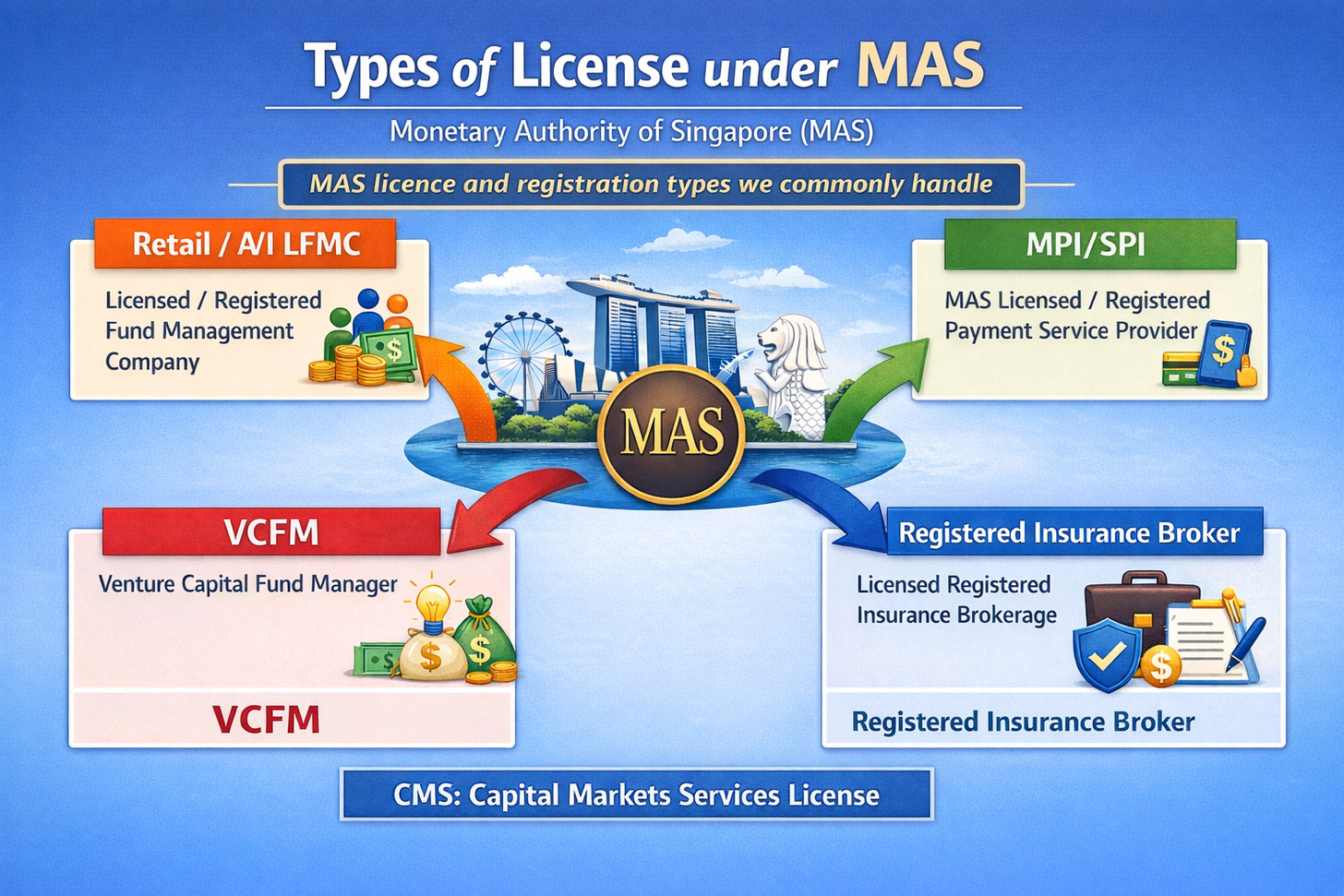
Navigating the intricate landscape of MAS licenses and CMS licenses is paramount for SFOs in Singapore. MAS has established a regulatory framework that SFOs must adhere to, particularly concerning licensing requirements.
When Is a MAS License Necessary?
A MAS license is imperative for SFOs engaging in specific financial activities, such as managing funds or offering investment advice. Grasping when a MAS license is obligatory is critical for SFOs to circumvent non-compliance.
Third-Party Fund Management Scenarios
In scenarios where an SFO manages funds on behalf of third parties, a MAS license is typically obligatory. This ensures the SFO is regulated and adheres to MAS guidelines.
External Capital Considerations
SFOs that accept capital from external sources may also necessitate a MAS license, contingent upon the nature of their activities. It is imperative to evaluate the specific requirements based on the SFO’s operations.
Navigating the CMS License Application
For SFOs necessitating a CMS license, the application entails submitting comprehensive documentation and undergoing a review by the MAS.
Documentation Requirements
The documentation required for a CMS license application encompasses business plans, organizational structure, and compliance policies. Ensuring all necessary documents are prepared is crucial for a seamless application process.
Timeline and Approval Process
The timeframe for CMS license approval can fluctuate, but it generally involves a meticulous review by the MAS anywhere between 8 to 12 months. Understanding the approval process and timeline is essential for SFOs to plan effectively.

Implementing AML/CFT Policies for Compliance
The implementation of AML/CFT policies is paramount for financial institutions to uphold compliance and diminish risks. The development of stringent standard operating procedures is indispensable to guarantee adherence to regulatory mandates.
Developing Robust AML/CFT Standard Operating Procedures
A thorough risk assessment framework is imperative to discern potential vulnerabilities and deploy countermeasures. This encompasses:
- Conducting regular risk assessments
- Implementing customer due diligence protocols
- Monitoring transactions for suspicious activity
Risk Assessment Framework
A risk assessment framework is instrumental in identifying potential risks and vulnerabilities. It necessitates an evaluation of the likelihood and impact of potential risks, followed by the implementation of mitigating measures.
Customer Due Diligence Protocols
Customer due diligence protocols are indispensable for verifying customer identities and assessing their risk profile. This entails verifying customer information and monitoring their activity.
Monitoring and Reporting Requirements
Transaction monitoring systems are pivotal in detecting and reporting suspicious activity. This entails:
- Implementing transaction monitoring systems
- Reporting suspicious activity to relevant authorities
Transaction Monitoring Systems
Transaction monitoring systems are instrumental in detecting suspicious activity by analyzing transaction data. They identify patterns and anomalies indicative of money laundering or terrorist financing.
Suspicious Activity Reporting
Suspicious activity reporting is crucial for reporting suspicious activity to relevant authorities. This involves filing reports with the STRO Online Notices And Reporting platform (SONAR) and other pertinent authorities. For more information on compliance support, visit Alder’s Compliance Support.
Conclusion
Grasping the complexities of SFO, MAS licensed, and CMS license mandates is paramount for achieving regulatory compliance. Tax exemption schemes under 13O and 13U present substantial advantages, yet necessitate meticulous navigation. The implementation of stringent AML/CFT policies is critical to mitigate risks and uphold regulatory standards.
The regulatory terrain for investment funds and SFOs is replete with intricate considerations, encompassing license prerequisites and tax exemptions. By comprehending these nuances, entities can refine their structures and uphold compliance standards.
It is imperative to remain abreast of regulatory evolutions and exemplary practices. Entities must periodically scrutinize their compliance frameworks to guarantee congruence with the dynamic regulatory landscape. This is particularly pertinent in the realm of AML/CFT policies.
About the Author: Koh Teng Teng


This update is targeted at Licensed / Exempt Financial Advisers and Insurance Brokers. MAS has introduced updated misconduct reporting requirements that firms should start preparing for ahead of the implementation date of 1 January 2027. The changes affect how firms identify reportable misconduct, when reports must be filed, when follow-up updates are required, and what

Compliance should not slow a fund down. We support VCFMs with right-sized, cost-efficient compliance that scales as you grow, so you can focus on investing while regulatory expectations are met.

Outsource compliance for your MAS registered fund management company in Singapore. Reduce costs, get expert advisory, and stay on top of evolving MAS regulations.