

As Singapore positions itself as a global FinTech hub, cryptocurrency activities are gaining traction under tighter regulatory oversight. The Monetary Authority of Singapore (MAS) now requires all Digital Payment Token (DPT) service providers to be licensed and meet stringent AML/CFT and technology risk management standards. Whether you’re an exchange operator or an investor exploring the digital asset space, understanding the Payment Services Act is essential to staying compliant and future-ready.

Singapore continues to advance as a global crypto hub under the Payment Services Act (PS Act). With stricter oversight by MAS to address ML/TF, cyber, and consumer protection risks, crypto service providers are expected to strengthen compliance, risk management, and cyber resilience to operate responsibly in this evolving landscape.

As the economy of Singapore grows dynamically, investors are attracted to explore the opportunities and invest their money here. As a result, we can expect the hedge fund industry to perform well in the country. Singapore is competing alongside with Hong Kong, to become the top location that connects fund managers with asset owners who are looking for companies to assist with portfolio management.

The RFMC regime has been officially repealed by MAS, with all fund managers now transitioning to the A/I LFMC framework. The change streamlines regulatory oversight and supports Singapore’s growth as a trusted global fund management centre.

Interoperability lies at the heart of seamless cross-border transactions, empowering businesses and individuals to send and receive money effortlessly across borders. With rising global payment flows and demand for faster, cheaper, and more inclusive services, Singapore is taking the lead through innovative FinTech solutions. From PayNow-PromptPay linkages to the ambitious Project Nexus, Singapore’s initiatives are driving real-time connectivity and fostering financial inclusion across the region — paving the way for a borderless payments future.

Collective Investment Schemes (CIS) allow investors to pool funds into a managed portfolio of assets such as equities, bonds, or cash. Administered under the Monetary Authority of Singapore (MAS), all CIS offers must comply with the Securities and Futures Act (SFA) and the Code on Collective Investment Schemes.

Financial inclusion fuels economic growth and reduces poverty, especially in developing regions. Singapore supports global initiatives like the G20 roadmap to make cross-border payments faster, cheaper, and more accessible. Through partnerships with ASEAN neighbours such as Malaysia and the Philippines, Singapore is enhancing interoperability and building a more connected regional payment ecosystem — a vital step toward inclusive and sustainable financial integration.

Global capital markets participants are broadly classified into three groups — buy-side, sell-side, and financial intermediaries. While sell-side firms focus on issuing and selling securities, buy-side firms invest in them for fund management purposes. This article explores the buy-side segment, including hedge funds, private equity, and venture capital.

Singapore’s strong trade network and the signing of RCEP have deepened regional integration and boosted investor confidence. The hedge fund industry benefits from these developments, attracting significant inflows from global investors. Fund managers operating in Singapore are required to hold a Capital Markets Services (CMS) licence under MAS regulations.
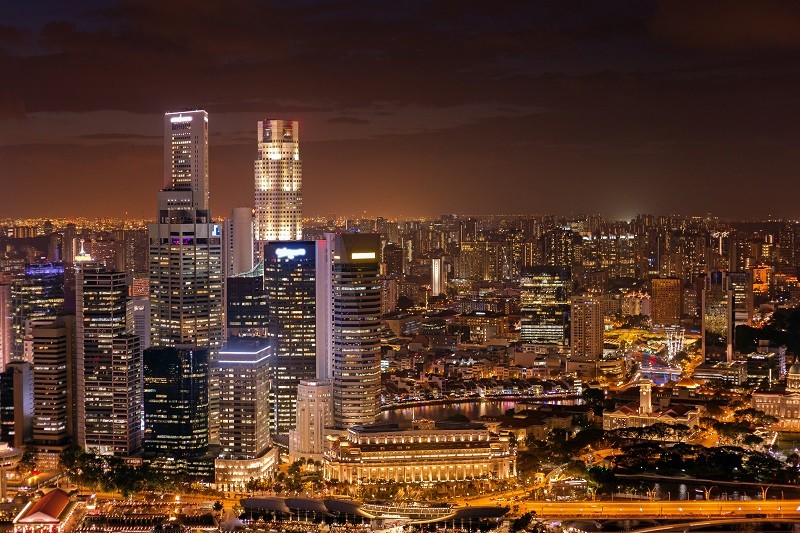
Singapore is rapidly emerging as one of Asia’s leading hedge fund hubs, rivaling Hong Kong. With government incentives, a favourable regulatory environment, and the introduction of the Variable Capital Company (VCC) structure, Singapore has attracted global fund managers seeking efficiency and stability. As more hedge funds set up locally, total assets under management have surged, solidifying Singapore’s position as a premier destination for fund management in Asia.

Your Trusted Compliance Partner
Navigate
Our Services
Get In Touch
133 Upper Cross Street, #08-01 Chinatown Point, Singapore 059413
+65 8040 4450
info@alder.com.sg