by Dean
Share
Share

Under standard Singapore Customs regulations, businesses importing non-dutiable goods must pay the prevailing 9% Goods and Services Tax (GST) upfront at the point of importation. For high-volume international trading hubs, logistics providers, and re-export distributors operating in Singapore, this upfront requirement creates a substantial cash flow timing gap. Companies must fund short-term tax capital while waiting up to three months to claim input tax back through their regular GST returns with the Inland Revenue Authority of Singapore (IRAS).
Administered under the Goods and Services Tax (General) Regulations, the Major Exporter Scheme (MES) eliminates this working capital friction. The scheme allows approved GST-registered businesses to import non-dutiable goods into Singapore with import GST suspended at the point of entry. It also extends GST suspension when removing goods from an approved Zero-GST Warehouse. Because MES permits goods to pass through customs checkpoints without immediate tax settlement, IRAS subjects all applicants and approved businesses to strict internal control standards and compliance audits.
Eligibility Criteria for the Major Exporter Scheme
To qualify for MES approval, a company must be GST-registered, financially solvent, and maintain a track record of full compliance with both IRAS and Singapore Customs.
In addition to general compliance requirements, an applicant must satisfy at least one of two statutory turnover tests based on historical trading figures over the preceding 12 consecutive months:
- The Percentage Ratio Test: Zero-rated supplies (direct export of goods and provision of international services) must account for more than 50% of the total value of all taxable supplies.
- The Absolute Value Test: If domestic sales dilute the export ratio below 50%, the total absolute value of zero-rated supplies must exceed S$10 million over the trailing 12-month window.
Companies must support these figures with accurate accounting records, commercial invoices, and export documentation to substantiate their trade volume.
The Mandatory GST Assisted Self-Help Kit (ASK) Review
IRAS does not grant or renew MES status based solely on statutory declarations. Applicants and businesses invited for renewal must complete a comprehensive self-assessment using the GST Assisted Self-Help Kit (ASK).
The key technical requirement is the ASK Annual Review (Section 3). This review involves a post-submission audit of the company’s past four quarters of GST returns (Form F5), including transaction sampling, reconciliations, and verification of required export documentation such as bills of lading, air waybills, commercial invoices, and packing lists.
Accreditation Requirements for the Reviewer
The completed ASK declaration cannot be certified by internal general accounting staff. The review must be formally conducted or certified by an individual accredited with Singapore Chartered Tax Professionals Limited (SCTP) as an:
- Accredited Tax Advisor (GST) [ATA (GST)], or
- Accredited Tax Practitioner (GST) [ATP (GST)]
This certified reviewer may be an external tax consultant or a qualified in-house compliance practitioner.
Managing Declaring Agents in TradeNet
Once approved, an MES business executes import GST suspension at border checkpoints by declaring a Customs In-Non-Payment (Approved Premises/Schemes) permit through TradeNet using the place of receipt code “ME”.
Declaring Agent Authorization Process
- Agent Authorization: The MES business authorizes up to 20 declaring agents (such as freight forwarders or customs brokers) via IRAS myTax Portal.
- TradeNet Permit Lodgement: The authorized agent enters the MES entity’s details and Code “ME” when filing the permit.
- Automated Validation: The Singapore Customs system cross-references the permit declaration against the approved agent registry.
- Customs Clearance: Import GST is suspended at the point of entry upon successful system validation.
Compliance Risks and Declaring Agent Liability
The MES permit holder remains legally and financially liable for all permits declared under its corporate status. If an authorized broker incorrectly uses your company’s MES status for an unauthorized shipment or another party’s goods, your business faces immediate back-tax exposure, potential penalties, and risk to your MES status.
Businesses must conduct monthly reconciliations by comparing TradeNet permit data downloaded via the Networked Trade Platform (NTP) directly against internal purchase ledgers and supplier invoices.
Renewal Validity and Operational Default Risks
Initial MES approval is granted for a validity period of 3 years. For subsequent renewals accompanied by a certified ASK review, IRAS may extend the validity period up to 5 years.
However, IRAS maintains the authority to revoke MES status if a business incurs operational defaults, such as:
- Unreported Threshold Drops: Zero-rated supplies fall below 50% of total taxable supplies (or below S$10 million) for two consecutive quarters without written notification to the Comptroller of GST.
- Filing and Payment Default: Missing GST return filing deadlines, failing to pay outstanding tax liabilities, or accumulating statutory default notices with the Accounting and Corporate Regulatory Authority (ACRA).
- Unreported Business Changes: Failing to report structural changes, changes in principal business activities, or changes in beneficial ownership of 50% or more within 30 days.
- Audit Documentation Failures: Inability to produce valid export documentation within the stipulated timeframe during an IRAS or Singapore Customs audit.
How Alder Supports Your Trade and Tax Compliance
Navigating multi-currency trade flows, managing customs declaring agents, and preparing certified ASK reviews require technical knowledge of Singapore tax and trade regulations.
Alder Corporate Services assists international traders and logistics businesses across the corporate lifecycle. Our specialists support client operations by setting up trade accounting systems, managing declaring agent authorizations, and guiding businesses through mandatory IRAS tax reviews.
To review your trade structure or prepare for an upcoming MES application, contact the corporate tax and compliance specialists at Alder Corporate Services.
Frequently Asked Questions
What is the primary benefit of the Major Exporter Scheme (MES)?
MES allows approved GST-registered businesses in Singapore to import non-dutiable goods without paying import GST at the point of entry, removing the cash flow burden of paying upfront tax and waiting for input tax refunds.
Can a newly incorporated business apply for MES?
A newly incorporated business or a company without a 12-month track record may apply if it can provide reliable financial projections demonstrating that it will meet the 50% ratio or S$10 million zero-rated supplies threshold within the next 12 months.
How many declaring agents can an MES company authorize?
An approved MES entity can authorize a maximum of 20 declaring agents to declare import permits on its behalf through the myTax Portal.
What happens if our export turnover falls below the required threshold?
If zero-rated supplies fall below the required ratio or absolute dollar threshold for two consecutive quarters, the business must notify the Comptroller of GST in writing within 30 days from the end of the second quarter.
About the Author: Dean

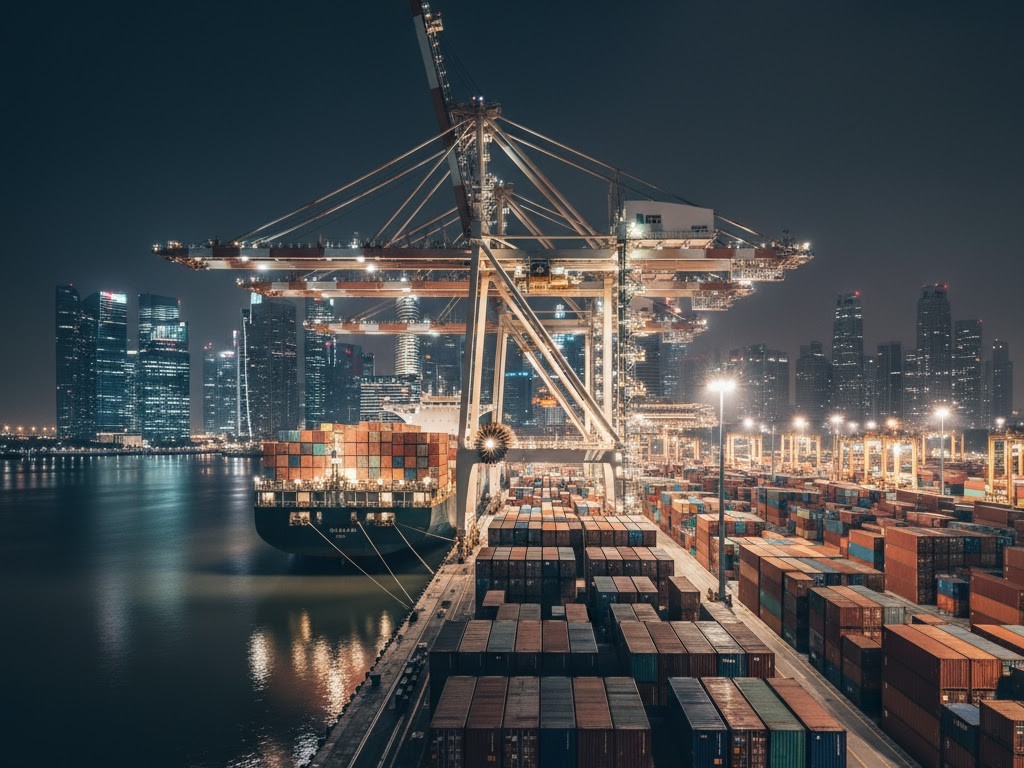
The strategic geographical location of Singapore at the crossroads of East and West contributes to its growth as a key trading hub. In order to facilitate trading business that is currently making significant contributions to the country’s economy, Singapore Customs has implemented various schemes and licences that meet different needs and requirements of traders.
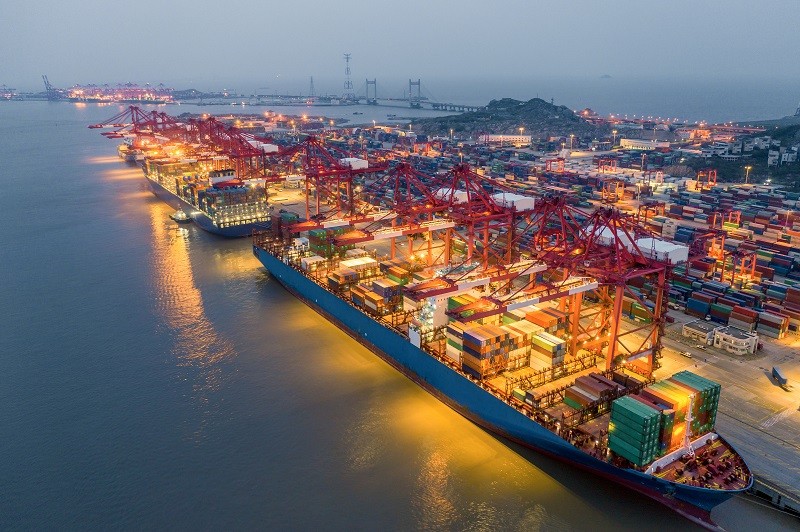
Singapore continues to strengthen its position as a global trading hub through initiatives that streamline export processes and boost trade competitiveness. With steady growth in non-oil domestic exports and strong demand for electronics and petrochemicals, government frameworks like TradeFIRST help businesses reduce costs, improve efficiency, and expand internationally.

To curb the proliferation of weapons of mass destruction (WMD), Singapore enforces strict export controls under the Strategic Goods (Control) Act (SGCA). The Act regulates the transfer, export, and brokering of strategic and dual-use goods to safeguard the global supply chain. In a recent enforcement case published by Singapore Customs, a company and its director were fined over S$250,000 for exporting strategic goods without a permit and submitting false declarations. Businesses are urged to implement strong internal controls and accurate trade declarations to ensure compliance and avoid severe penalties.